


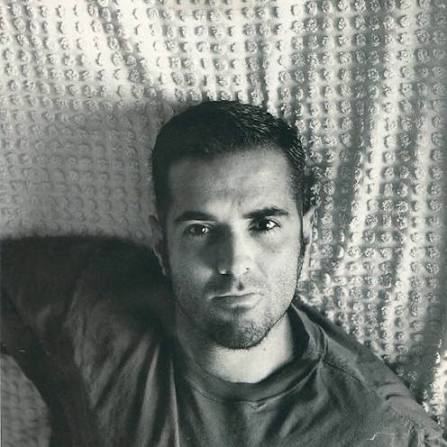
Felix Gonzalez-Torres was a Cuban-born American visual artist whose work was an exploration of love, loss, identity, memory, and political issues. Born in Cuba in 1957, Gonzalez-Torres spent part of his childhood in Spain before emigrating to Puerto Rico. He later moved to New York City, where he studied at Pratt Institute and the International Center of Photography, eventually earning a Master of Fine Arts degree from New York University.
Emerging as an artist during the 1980s, Gonzalez-Torres became associated with a generation of artists who challenged traditional ideas about art, authorship, and audience participation. His work often employed minimalist forms while conveying deeply personal and emotional themes. Rather than creating conventional sculptures or paintings, he used everyday objects such as candy, light bulbs, clocks, paper stacks, and billboards to communicate complex ideas about relationships, mortality, and social responsibility.
One of his most celebrated works exemplifying the conceptual nature of his output is “Untitled” (Portrait of Ross in L.A.), which consists of a pile of wrapped candies weighing approximately 175 pounds, representing the healthy body weight of his partner, Ross Laycock, who died of AIDS-related complications. Visitors are invited to take pieces of candy, gradually diminishing the sculpture and symbolizing the effects of illness and loss. Similar themes appear throughout Gonzalez-Torres’s work, particularly in response to the AIDS epidemic, which had a profound impact on his life and artistic vision.
As a gay Latino artist, Gonzalez-Torres addressed issues of sexuality, identity, and political power while maintaining an accessible and poetic visual language. His art encouraged viewers to become participants, blurring the boundaries between the artwork and its audience. Through this approach, he transformed personal experiences into universal reflections on human connection and vulnerability.
Despite his relatively short career, Gonzalez-Torres achieved international recognition and exhibited in major museums and galleries worldwide. He died in Miami, Florida, in 1996 from complications related to AIDS. Today, his work remains highly influential and is celebrated for its emotional depth, conceptual innovation, and enduring exploration of love, memory, and the fragile nature of life.